No Knead Rosemary Dutch Oven Bread
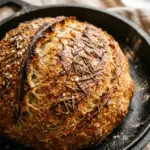
- Cook Time: 13 hours 0 minutes
- Total Time: 13 hours
- Diet: Vegetarian, Vegan
Ingredients
Scale
- 3 cups all-purpose flour (or bread flour)
- 1 ½ teaspoons salt
- ½ teaspoon active dry yeast
- 1 ½ cups warm water (about 100°F)
- 2 tablespoons fresh rosemary, finely chopped
- 1 tablespoon olive oil (optional for brushing)
- Extra flour for dusting
Instructions
- In a large mixing bowl, whisk together the flour, salt, active dry yeast, and chopped rosemary. Ensure the rosemary is evenly distributed so that every bite of bread has that wonderful herbal flavor.
- Pour the warm water into the flour mixture. Use a sturdy spoon or a spatula to stir until a shaggy, sticky dough forms and no dry flour streaks remain. Do not worry about the dough looking messy; it is supposed to be hydrated and a bit loose.
- Cover the bowl tightly with plastic wrap or a clean kitchen towel. Place it in a warm, draft-free spot and let it sit for at least 12 hours, though 18 hours is even better. During this time, the dough will double in size and become dotted with bubbles.
- About 30 minutes before you are ready to bake, place your empty Dutch oven (with the lid on) into the oven. Preheat the oven to 450°F (230°C). It is crucial that the pot is extremely hot before the dough goes in.
- Turn the dough out onto a well-floured surface. It will be very sticky, so use plenty of flour on your hands. Gently fold the dough over itself a few times to form a rough ball. Place the dough onto a piece of parchment paper for easy transferring.
- Carefully remove the hot Dutch oven from the oven. Lift the parchment paper with the dough and lower it into the pot. Cover with the lid and bake for 30 minutes. This traps the steam and allows the bread to rise significantly.
- Remove the lid from the Dutch oven. Continue baking for another 15 minutes, or until the crust is a deep golden brown and sounds hollow when tapped. Let the bread cool on a wire rack for at least 30 minutes before slicing to ensure the interior sets properly.