
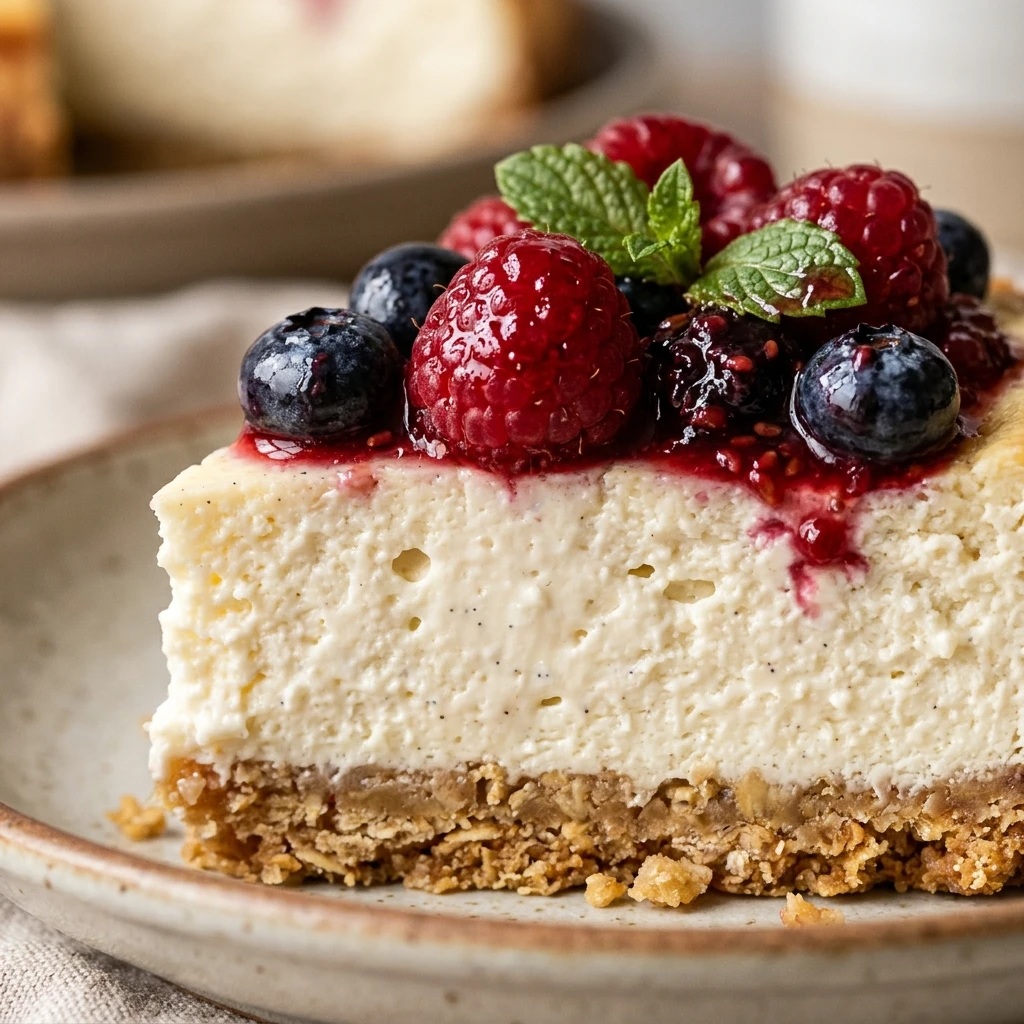

Finding a dessert that satisfies your sweet tooth while helping you hit your fitness goals can feel like a challenge. This High-Protein Greek Yogurt Cheesecake is the perfect solution. It offers a velvety texture and rich flavor without the heavy calorie count of traditional cheesecake. Whether you are a fitness enthusiast or just looking for a healthier treat, this recipe is a game-changer.
By swapping heavy cream and full-fat cream cheese for thick Greek yogurt and lighter alternatives, you get a dessert packed with protein. It’s incredibly simple to make and tastes even better the next day. Let’s dive into how you can create this masterpiece in your own kitchen.
Recipe Information
- Prep Time: 15 minutes
- Cook Time: 50 minutes
- Total Time: 4 hours 5 minutes
- Servings: 8
- Difficulty Level: Medium
Nutrition Information
- Calories per serving: 195 kcal
- Protein: 18g
- Carbohydrates: 14g
- Fat: 7g
- Fiber: 1g
- Sugar: 6g
- Sodium: 210mg
Why Make This High-Protein Greek Yogurt Cheesecake
Traditional cheesecake is often loaded with fat and sugar, making it a rare indulgence. This version changes the narrative. By using Greek yogurt as a primary base, you get a significant protein boost and a dose of healthy probiotics. It is much lighter on the stomach but still feels incredibly decadent.
It is also a fantastic meal-prep option for those who enjoy a sweet snack after a workout. You can slice it up and have a high-protein treat ready to go throughout the week. It pairs perfectly with fresh fruit or a drizzle of nut butter, making it both versatile and delicious.
How to Make High-Protein Greek Yogurt Cheesecake
Creating this cheesecake is surprisingly straightforward. You do not need professional baking skills to achieve a smooth, crack-free finish. Follow these simple steps to transform basic ingredients into a high-protein delight that everyone will love.
Ingredients
- 1.5 cups non-fat Greek yogurt (plain)
- 8 oz low-fat cream cheese, softened
- 2 large eggs
- 1/2 cup vanilla protein powder
- 1/4 cup honey or maple syrup
- 1 tsp vanilla extract
- 1 cup graham cracker crumbs
- 2 tbsp melted coconut oil
Directions
Step 1: Preparation
Preheat your oven to 325°F (160°C). Grease a 7-inch or 8-inch springform pan with non-stick spray or line the bottom with a circle of parchment paper for easy removal.
Step 2: Crust Assembly
In a small bowl, mix the graham cracker crumbs with the melted coconut oil until the mixture resembles wet sand. Press the mixture firmly into the bottom of the prepared pan. Bake for 8 minutes, then remove and set aside to cool.
Step 3: Cream Cheese Mixing
In a large mixing bowl, beat the softened cream cheese until it is completely smooth. Add the Greek yogurt, honey, and vanilla extract. Whisk or beat on medium speed until the mixture is fully combined and free of any lumps.
Step 4: Incorporating Protein and Eggs
Gently fold in the vanilla protein powder until just combined. Add the eggs one at a time, mixing on low speed until just incorporated. Be careful not to overmix at this stage, as extra air can cause the cheesecake to crack during baking.
Step 5: Baking
Pour the batter over the pre-baked crust and smooth the top with a spatula. Place the pan in the oven and bake for 40 to 50 minutes. The edges should be set, but the center should still have a slight jiggle when you gently shake the pan.
Step 6: Slow Cooling
Turn off the oven and leave the door slightly ajar for about 30 minutes. This slow cooling process prevents the top from cracking. Remove from the oven and let it reach room temperature on the counter before placing it in the refrigerator.
Step 7: Final Chilling
Refrigerate the cheesecake for at least 3 hours, though overnight is best for the flavor to develop and the texture to firm up properly.
How to Serve High-Protein Greek Yogurt Cheesecake
Serve this cheesecake chilled directly from the refrigerator. To make it look professional, top it with fresh berries like strawberries or raspberries. A light dusting of cocoa powder or a few dark chocolate shavings can also add a nice touch. For an extra protein boost, serve it with a dollop of extra Greek yogurt on the side.
How to Store High-Protein Greek Yogurt Cheesecake
Store any leftovers in an airtight container in the refrigerator for up to 5 days. If you want to keep it longer, this cheesecake freezes exceptionally well. Wrap individual slices tightly in plastic wrap and store them in a freezer-safe bag for up to 2 months. Simply thaw a slice in the fridge for a few hours before eating.
Expert Tips for Perfect High-Protein Greek Yogurt Cheesecake
Always ensure your cream cheese and eggs are at room temperature before you start mixing. This is the secret to a perfectly smooth batter. If the yogurt has excess liquid, you can strain it through a cheesecloth for 30 minutes to ensure a thicker, creamier cheesecake. Lastly, don’t skip the slow cooling step in the oven; it’s the best way to avoid those common surface cracks.

Delicious Variations
You can easily customize this recipe to your liking. For a Chocolate Cheesecake, use chocolate protein powder and add 1 tablespoon of unsweetened cocoa powder to the batter. For a Lemon Swirl version, add a tablespoon of lemon zest and a teaspoon of lemon juice. If you are watching your carbs, swap the graham cracker crust for a mixture of crushed almonds and a little butter.
Frequently Asked Questions
Q: Can I use full-fat Greek yogurt?
Yes, full-fat Greek yogurt will make the cheesecake even creamier and richer, although it will increase the total calorie and fat content per serving.
Q: Why did my cheesecake crack on top?
Cracks are usually caused by over-beating the eggs or cooling the cheesecake too quickly. Make sure to mix the eggs on low speed and use the oven-cooling method mentioned in the directions.
Q: Do I have to use protein powder?
You can omit it if you prefer, but you may need to add a tablespoon of cornstarch to the batter to help it set properly, and possibly a bit more sweetener.
Q: Can I make this recipe crustless?
Absolutely! This recipe works great as a crustless cheesecake. Just make sure to grease your pan very well or line the entire pan with parchment paper to prevent sticking.
Q: Is this cheesecake keto-friendly?
As written, the graham crackers and honey contain carbs. To make it keto, replace the honey with a sugar-free sweetener like monk fruit and use an almond flour-based crust.
Conclusion
This High-Protein Greek Yogurt Cheesecake proves that healthy eating doesn’t have to be boring. It is creamy, satisfying, and easy to prepare, making it the ultimate guilt-free indulgence. Give this recipe a try for your next dessert or as a high-protein snack, and enjoy a delicious, nutritious take on a classic favorite!

High-Protein Greek Yogurt Cheesecake

- Cook Time: 4 hours 5 minutes
- Total Time: 4 hours 5 minutes
- Diet: High-Protein
Ingredients
- 1.5 cups non-fat Greek yogurt (plain)
- 8 oz low-fat cream cheese, softened
- 2 large eggs
- 1/2 cup vanilla protein powder
- 1/4 cup honey or maple syrup
- 1 tsp vanilla extract
- 1 cup graham cracker crumbs
- 2 tbsp melted coconut oil
Instructions
- Preheat your oven to 325°F (160°C). Grease a 7-inch or 8-inch springform pan with non-stick spray or line the bottom with a circle of parchment paper for easy removal.
- In a small bowl, mix the graham cracker crumbs with the melted coconut oil until the mixture resembles wet sand. Press the mixture firmly into the bottom of the prepared pan. Bake for 8 minutes, then remove and set aside to cool.
- In a large mixing bowl, beat the softened cream cheese until it is completely smooth. Add the Greek yogurt, honey, and vanilla extract. Whisk or beat on medium speed until the mixture is fully combined and free of any lumps.
- Gently fold in the vanilla protein powder until just combined. Add the eggs one at a time, mixing on low speed until just incorporated. Be careful not to overmix at this stage, as extra air can cause the cheesecake to crack during baking.
- Pour the batter over the pre-baked crust and smooth the top with a spatula. Place the pan in the oven and bake for 40 to 50 minutes. The edges should be set, but the center should still have a slight jiggle when you gently shake the pan.
- Turn off the oven and leave the door slightly ajar for about 30 minutes. This slow cooling process prevents the top from cracking. Remove from the oven and let it reach room temperature on the counter before placing it in the refrigerator.
- Refrigerate the cheesecake for at least 3 hours, though overnight is best for the flavor to develop and the texture to firm up properly.